
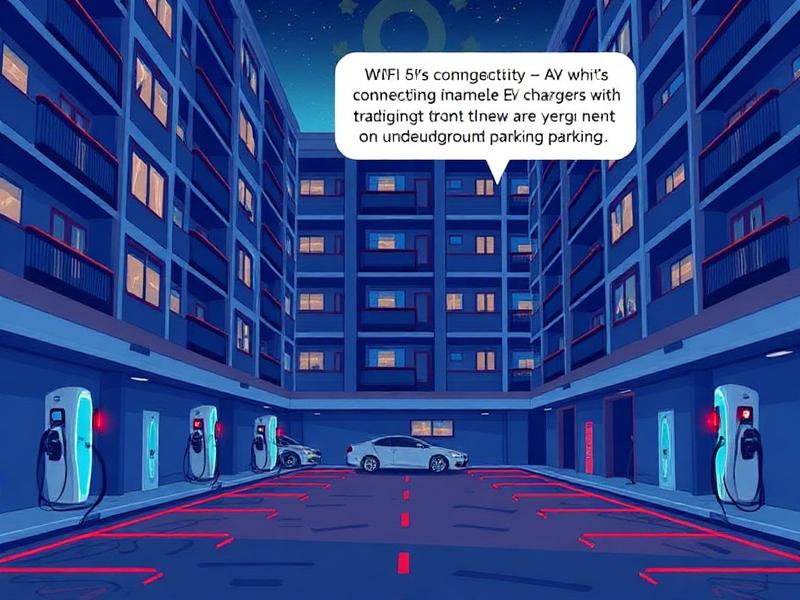
Which Parking Spaces Do EV Chargers Take?
An EV charging project at a Florida condominium or apartment community raises a parking question before it raises an electrical one. How many spaces, which ones, and who is allowed to use them.
Parking is harder to add than almost anything else a property can put in, which is what gives those three questions their weight. They are worth answering plainly, and in that order.
Short answer: one space per port, and the number of ports is a decision the property makes rather than a number the equipment forces on it. For multifamily, Florida Chargers uses a planning ratio of about one Level 2 port per 20 to 30 units as a starting point. Which spaces get chosen is driven largely by how far the candidate spaces sit from the building's electrical service and by what the governing documents say about those particular spaces. Who may park in them afterwards is a rules question that belongs to the association or the property owner, not to the installer.
A port covers the space its cable reaches
A Level 2 charger is not a zone. It serves the vehicle plugged into it, which means it serves the space its cable can reach from wherever the unit is mounted.
Tesla's Universal Wall Connector datasheet lists the cable by part number: 24 ft (7.3 m) on one part number and 13.1 ft (4 m) on the other. That is most of the geometry of the problem. A mounting position, a cable length, and a vehicle whose charge port sits in a different place depending on the model.
It also means a board counting boxes on a site drawing is counting the wrong thing. Ports are what map to spaces, and whether a single enclosure carries one port or two varies by product and by manufacturer. The number that belongs in a proposal is the port count, with the specific spaces each port is drawn against.
The spaces nearest the power are the cheap spaces
The second thing that picks the spaces is distance. The further the candidate spaces sit from the building's electrical service, the more conduit, wire and trenching the project buys to reach them. Where the money goes on a Florida install is its own subject, and the length of that run is one of the lines in it.
This is what a site assessment reads: the distance from the service to each candidate space, and what the service has spare. The spaces a community would volunteer first, out in the corner nobody likes, can be the most expensive ones to build to. The spaces nobody suggested, nearest the service equipment, can be the cheapest.
So the port count and the port locations are worth settling together rather than in sequence. A community that picks the spaces first and prices them second is choosing a number it has not seen yet.
Two routes into the parking lot, landing on different spaces
Florida condominium law describes two different things here, and they touch different spaces.
The first is a unit owner installing at a space that is already theirs. Under Fla. Stat. 718.113(8)(a), a condominium board may not prohibit a unit owner from installing an electric vehicle charging station within the owner's limited common element or exclusively designated parking area, subject to the subsection's conditions. The same subsection puts the costs with that owner. Paragraph (8)(c) requires the electricity to be separately metered or metered by an embedded meter and payable by the installing owner or a successor. Paragraph (8)(e) places installation, operation, maintenance and repair costs there as well, including hazard and liability insurance. Paragraph (8)(f) requires the owner to pay for removal once the station is no longer needed. Paragraph (8)(h)2 provides that reasonable architectural standards adopted by the association may not prohibit the station or substantially increase its cost. The text above is the 2026 Florida Statutes.
The second is the association putting chargers on the common elements. Fla. Stat. 718.113(9) lets the board make available, install or operate an electric vehicle charging station on the common elements or association property, and provides that the installation, repair or maintenance of one under that subsection does not constitute a material alteration or a substantial addition to the common elements or association property. The same subsection lets the board establish the charges or the manner of payments for unit owners, residents or guests who use it. The vote question is covered in full here.
The distinction matters for parking because the two routes land differently. The first changes a space that is already assigned, one at a time, on an owner's initiative. The second changes spaces the association selects, as a group, on its own schedule. A community answering two owner requests is not in the same conversation as a community planning a bank of ports, even though both end up with chargers in the lot.
Chapter 718 governs condominiums. Chapter 720 governs homeowners' associations, and 718.113 does not apply to an HOA or to a rental apartment community. An apartment owner needs no association vote and no membership meeting to put chargers in its own lot. Many declarations also contain their own material-alteration provisions, and association counsel can confirm how those apply to a specific community.
Who may park there is a rules question
Installing a charger does not write a parking rule. It puts equipment at a space.
Subsection (9) speaks to charging for use. It lets a board that installs on the common elements establish the charges or the manner of payments for unit owners, residents or guests who use the station. It says nothing about which spaces a board may select or who may park in them, and neither does an installer.
Whether a charging space can be reserved for a vehicle that is actively charging, what the signage says, how long a vehicle may sit there once it has finished, and how any of that is enforced come out of the governing documents and association counsel in a condominium, or out of the lease and the community rules in an apartment community. Florida Chargers installs and operates the chargers. It does not draft the rules for the spaces they sit in.
So the parking rule and the charging install are two separate pieces of work that happen to land in the same lot.
Why the number is usually smaller than the room expects
The planning ratio Florida Chargers uses for multifamily is about one Level 2 port per 20 to 30 units, and it is a starting point rather than a target. How many a specific community needs depends on its own unit count and on what the building's electrical service can carry.
Florida Chargers puts installed cost at $5,000 to $8,000 per port before incentives, so the port count is a budget line and a parking line at the same time. The two move together, which is a reason to decide them in one conversation rather than in two.
What the property gets for the spaces
Under Share the Revenue, the property invests in the professional installation and Florida Chargers owns and operates the chargers. The property then shares in net charging profit for the full term. Tesla Wall Connector hardware is included, with no separate hardware charge. Financing is available for qualified properties to cover the electrical infrastructure and installation with no money down, so a project can start without drawing on reserves. Florida Chargers publishes an ROI calculator on its site.
Which turns the parking question into a better one. Not how many spaces the community is giving up, but how many it wants working for it, and where they should sit.
A proposal is readable on three points: which spaces each port is drawn against, how far those spaces sit from the electrical service, and what cable length the layout assumes. These apply to any EV charging proposal, including one from Florida Chargers.
Florida Chargers is a veteran-owned, Tesla Certified commercial EV installer serving condominium associations, HOAs and apartment communities across Florida. Reach out for a no-pressure free site assessment.
Call 321-475-2689 or visit flchargers.com.
This article is for informational purposes only and does not constitute legal advice. Consult a licensed Florida attorney for guidance specific to your association.
Frequently asked questions
Want a real number for your property?
Free site assessment — we'll walk the parking, check the electrical, and give you a straight, board-ready proposal.
Request a free site assessment