
Panama City Beach · Bay County
EV Charger Installation for Panama City Beach Condo Towers
Florida Chargers installs networked Tesla Universal Wall Connectors at Panama City Beach high-rise condominium properties, where the parking is structured, the guests change weekly, and the serving utility has the best active make-ready credit in Florida.
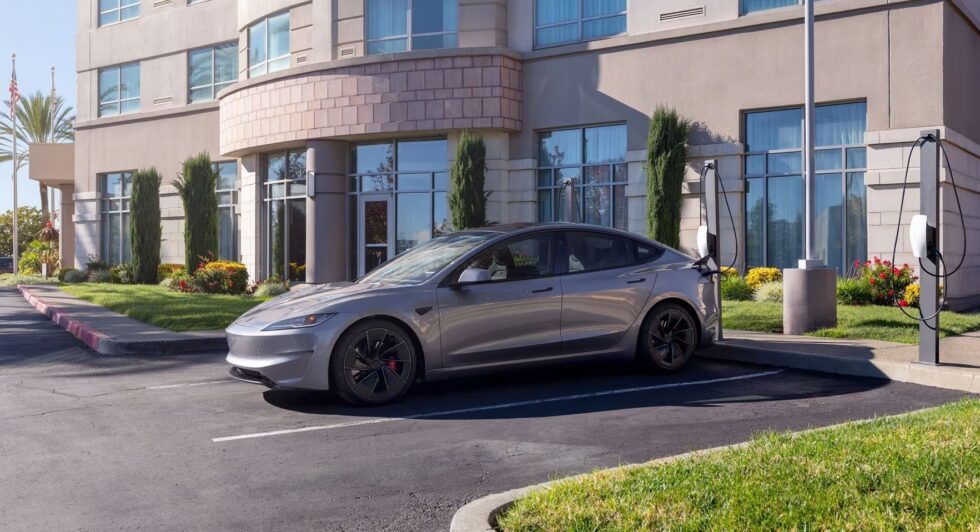
Panama City Beach has a charging problem that inland properties do not: the driver using the port this week is not the owner. Most of the beachfront towers run heavy short-term rental turnover, so a charger has to bill a stranger correctly, work without an on-site attendant, and not become a front-desk complaint on a Saturday changeover day.
Florida Chargers is a veteran-owned, Tesla Certified commercial EV charging reseller and installer that works the Panhandle from its Winter Garden base, under FL Certified Electrical Contractor license EC13009718. Florida Chargers designs, installs, manages, and maintains the system, including session billing, monitoring, and driver support, so a rental-heavy building is not administering charging with its own staff.
The arriving demand is drive-market demand. Florida has 450,400 registered EVs, second only to California's 1,843,100, out of 5,689,100 nationwide, per U.S. Department of Energy Alternative Fuels Data Center 2025 data, and a large share of Panama City Beach guests arrive by car from Atlanta, Birmingham, Nashville, and Montgomery.
What Florida Chargers installs in Panama City Beach
The hardware is the Tesla Universal Wall Connector: a Level 2 unit rated at 48 amps and 11.5 kW, with a NACS connector and a built-in J1772 adapter. It plugs straight into a Tesla and charges every other major EV brand through the adapter that is already attached, so a property is not choosing a charger that serves one brand of car. Load sharing spreads available circuit capacity across multiple ports, which is what keeps a project from turning into a service upgrade.
Florida Chargers designs, installs, manages, and maintains the system, and the chargers are eligible for listing in the Tesla app once commissioned by a Tesla Certified Installer with reliable connectivity (Tesla makes the final listing decision), so nearby drivers can be routed to the property.
In a coastal structured-parking deck, mounting location and conduit routing matter as much as the unit itself. Florida Chargers places wall-mounted connectors on interior deck walls where possible to keep hardware out of direct salt exposure, and uses load sharing so a tower can add ports without a new feeder from the electrical room.
A common starting point for multifamily is roughly one Level 2 port per 20 to 30 units, then adding ports as usage data comes in.
Who this is for in Panama City Beach
High-rise beachfront condominium towers. The towers along Front Beach Road and Thomas Drive are the core of this market. They have structured or surface parking with the electrical room usually on the ground level, which shortens conduit runs, and they have the guest volume to keep ports busy through the season. They also have the most complicated governance, because unit owners, the association, and rental managers all have a stake in who gets to charge.
Rental-heavy buildings with weekly turnover. A tower where most units are in a rental program needs charging that works like a public amenity: a guest pulls in, plugs in, and pays through the app without a call to the office. Networked billing handles that, and because the chargers are eligible for listing in the Tesla app (Tesla makes the final listing decision), drivers searching for charging in Panama City Beach can see the property. For a building competing on booking sites against a dozen others within two miles, that visibility is the point. Hilton's Jean Garris Hand told Skift in 2025 that EV charging is the highest-converting amenity on Hilton.com, which is the same guest behavior that shows up in Panhandle rental bookings. For a Panama City Beach hotel GM, chargers eligible for listing in the Tesla app once commissioned by a Tesla Certified Installer with reliable connectivity (Tesla makes the final listing decision) can route drive-market guests coming down from Alabama and Georgia to the property as a planned stop on the trip.
Owner-occupied and long-term units in the same building. Most towers have both. For the condominium side, Fla. Stat. 718.113(8) says the board may not prohibit a unit owner from installing a charger in the owner's limited common element or exclusively designated parking area, subject to the subsection's conditions, and Fla. Stat. 718.113(9) says a board installation on the common elements is not a material alteration, so it generally does not require a full membership vote. Chapter 718 governs condominiums and Chapter 720 governs HOAs, so neither provision applies to an HOA or a rental apartment community. Many declarations contain their own material-alteration provisions, so confirm with association counsel — coastal declarations in particular tend to be specific about exterior and common-element work.
Your utility and what it pays for
Panama City Beach properties are served by Florida Power & Light. Gulf Power merged into FPL in 2021, so older documents, invoices, and association records may still say Gulf Power. It is the same utility now.
That is good news for a Panhandle property. The FPL EVolution Make-Ready Credit is open and provides up to $1,200 per port for Level 2 charging, first-come until the program budget is depleted. FPL's own materials state that credits are no longer available once the budget is depleted. It is the best active program in Florida, and it is the one reason a board sitting on the decision should not sit on it indefinitely.
Florida SB 1084 (2024) preempted the regulation of EV charging stations to the state; since July 1, 2024, local governments may not enact or enforce their own EV-charging ordinances. The electrical permit itself is still issued locally. That is a good thing for a board or an owner: a property installs charging because the amenity economics work, not because a local ordinance forced the decision.
Permitting and timeline
Electrical permits for properties inside the city limits are issued by the City of Panama City Beach. Properties outside the city limits permit through Bay County. Coastal high-rise work also runs through the association's own architectural or engineering review, and on structured parking that review usually needs the mounting and conduit detail in hand before it can be approved.
A typical project runs 6 to 12 weeks from signed agreement to energized chargers. That window covers design, permitting, utility coordination, installation, and commissioning. Florida Chargers pulls the electrical permit under FL Certified Electrical Contractor license EC13009718.
What it costs
Installed cost runs $5,000 to $8,000 per port before incentives. The spread comes from trenching distance to the panel, available panel capacity, wall-mounted versus pedestal placement, port count, and whether the path is concrete or landscaping.
Structured parking often lands in the lower half of that range, because the electrical room and the parking are in the same structure and there is little or no trenching. Surface lots across Front Beach Road from the tower are the opposite case, and coastal-rated materials add cost where hardware cannot be kept under cover.
Under Share the Revenue, the property invests in the professional installation and Florida Chargers owns and operates the chargers — then the property earns 50% of net charging profit for the full term. Tesla Wall Connector hardware is included. Financing is available for qualified properties to cover the electrical infrastructure and installation with no money down, so a project can start without a capital outlay from reserves or a special assessment. Exact economics are confirmed during the free site assessment.
To model the numbers for a specific property, use the EV charging ROI calculator.
Panama City Beach EV charging questions
This is for informational purposes only and does not constitute legal advice. Consult a licensed Florida attorney for guidance specific to your association.
Keep reading
- Commercial EV charging in Florida
Statewide overview of hardware, programs, and installation scope.
- EV charging ROI calculator
Model ports, usage, and revenue with the hotel or multifamily inputs.
- EV charging for Florida hotels and resorts
Why charging converts bookings and how resort properties add it.
- Destin and Miramar Beach installation
Resort condos and vacation-rental buildings an hour west.
- Hotel EV charging installation
Tesla app listing eligibility, booking conversion, and revenue models.
Get a straight number for your Panama City Beach property
Florida Chargers walks the parking, checks the panel, confirms the serving utility, and returns a board-ready proposal. Veteran-owned, FL Certified Electrical Contractor EC13009718. Call 321-475-2689 or email info@flchargers.com.
Request a free site assessment