
Blog
Florida Chargers Blog
Real-world insights on Tesla commercial EV charging for Florida properties — no hype, no fluff.

EV Charging for Destin and Miramar Beach Resorts
What a Destin or Miramar Beach resort GM actually decides about EV charging -- ports, placement, guest access, pricing, utility and timeline -- and what drivers see before they book.
Read: EV Charging for Destin and Miramar Beach Resorts
Who Fixes a Condo EV Charger That Fails at 11 PM?
When a shared EV charger in a Florida condo garage stops working, the answer to who fixes it, who pays and who owns uptime should already be in writing. Here is what to ask.
Read: Who Fixes a Condo EV Charger That Fails at 11 PM?
Can Tesla Chargers Avoid an Electrical Service Upgrade?
Tesla's Remote Meter is a one-charger tool. For a condo or apartment bank, the levers are configurable current and Group Power Management, and a site assessment decides the rest.
Read: Can Tesla Chargers Avoid an Electrical Service Upgrade?Qmerit or a Tesla Certified Installer: Who Does the Work
Two Florida EV charging proposals can both say certified and mean different things. One is a national contractor network. The other is a local firm holding the certification itself.
Read: Qmerit or a Tesla Certified Installer: Who Does the WorkTesla vs. Blink for Florida Multifamily: What the Specs Say
Blink publishes more than one Level 2 charger and more than one business model. The differences between them can be larger than the difference between brands.
Read: Tesla vs. Blink for Florida Multifamily: What the Specs SayNACS, J1772, and the Plug Your Property Actually Installs
A board picking EV charging hardware wants to know it will still work in ten years. The connector question is more settled than it looks, and most of it is handled at the wall.
Read: NACS, J1772, and the Plug Your Property Actually Installs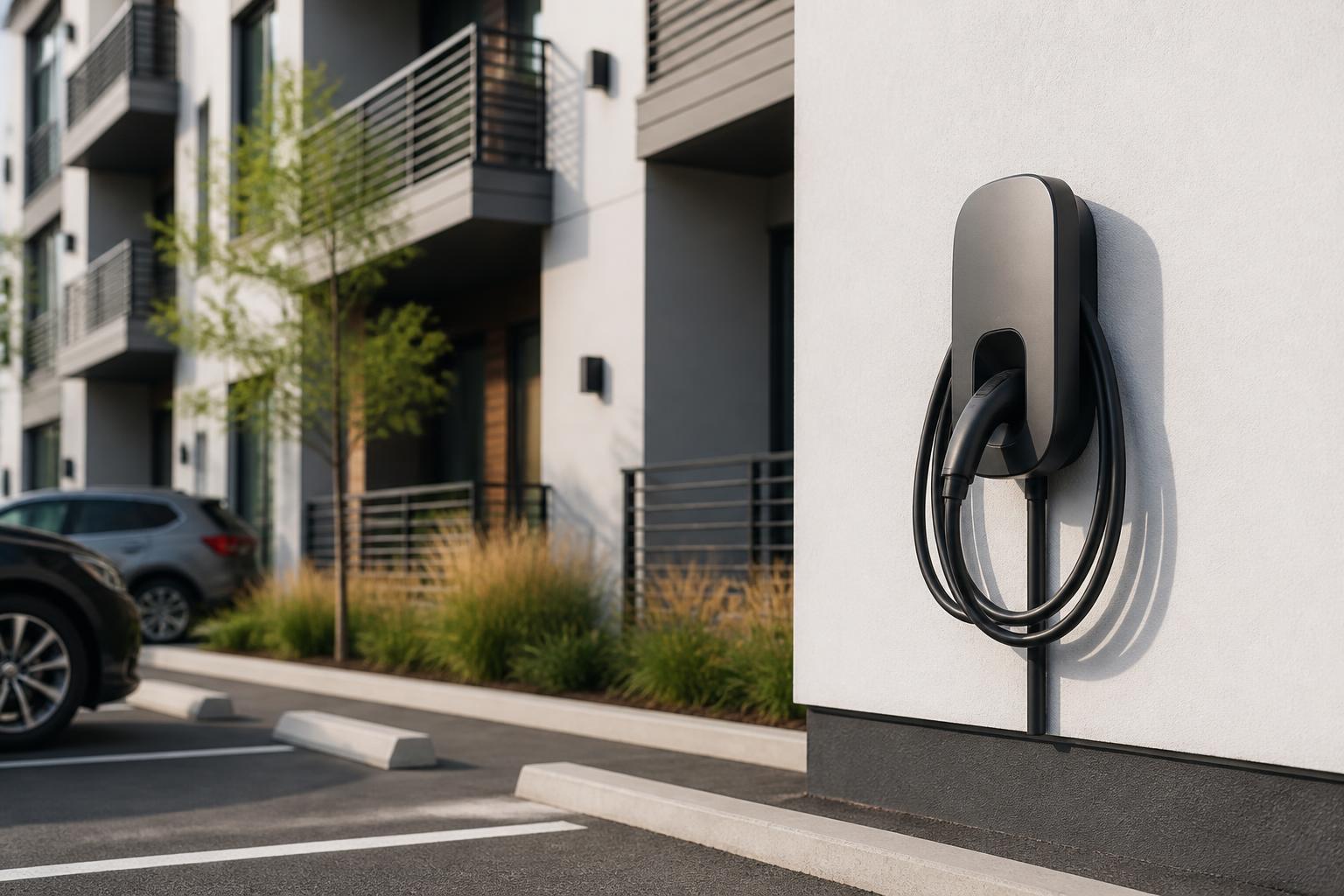
Station Square Ruling: Florida Condo EV Charger Board Conditions Under 718.113
In August 2026 the Second District affirmed a temporary injunction for a Pinellas County condominium against an owner-installed EV charger. Here is what that early-stage ruling means for a condo board.
Read: Station Square Ruling: Florida Condo EV Charger Board Conditions Under 718.113What Florida Utilities Actually Pay Toward a Commercial EV Charger Install
Florida utilities publish credits toward commercial EV charging infrastructure. The per-port amounts vary by charger type and access, and the Level 2 figure is the smallest on the page.
Read: What Florida Utilities Actually Pay Toward a Commercial EV Charger InstallWhere the Money Actually Goes on a Florida EV Charger Install
Two bids for the same job can differ by thousands without differing on the charger. The public cost data says labor and distance from the power source are what move the number.
Read: Where the Money Actually Goes on a Florida EV Charger InstallHow Many EV Chargers Does a 200-Unit Florida Community Actually Need?
The usual ratio puts a 200-unit community at seven to ten Level 2 ports. What decides the real number is how those ports get used, and what the site can grow into later.
Read: How Many EV Chargers Does a 200-Unit Florida Community Actually Need?ChargePoint Cloud Plan Fees in 2026: A 10-Year Look for a 6-Port Florida HOA
ChargePoint retired its legacy cloud plans in June 2026. At a reseller's listed prices for those plans, six ports would cost $17,940 to $28,500 in fees over ten years, held flat.
Read: ChargePoint Cloud Plan Fees in 2026: A 10-Year Look for a 6-Port Florida HOAEV Charging for Florida Apartment Communities: What It Actually Costs in 2026
Installed cost runs $5,000 to $8,000 per port before incentives. The trench, the panel, and the port count move that number far more than the charger on the wall does.
Read: EV Charging for Florida Apartment Communities: What It Actually Costs in 2026Why Being on Tesla's Charging Network Brings More Guests to Your Hotel
Hotels on Tesla's charging network show up in trip-planning tools before guests ever search for them by name. Here's why that matters for bookings.
Read: Why Being on Tesla's Charging Network Brings More Guests to Your HotelThe EV Charging Policy Every Florida Condo Board Should Adopt Before the First Request
A written EV charging policy, adopted before the first request, is the most consistent way for a Florida condo board to apply the conditions 718.113(8) allows.
Read: The EV Charging Policy Every Florida Condo Board Should Adopt Before the First RequestDo Florida Apartment Owners Need Board Approval for EV Charging? No — Here's Why
Florida's condo EV charging statute doesn't apply to rental apartments. There's no board, no vote, and no statutory review standard to satisfy — just a capital decision.
Read: Do Florida Apartment Owners Need Board Approval for EV Charging? No — Here's WhyExtension Cords in the Garage: The Insurance Exposure Florida Boards Aren't Pricing
Extension cords in a shared garage aren't a workaround — they're exposure. Here's what Florida condo boards are actually carrying by not acting.
Read: Extension Cords in the Garage: The Insurance Exposure Florida Boards Aren't PricingOwner EV Charger Requests Under 718.113(8): A Defensible Board Process
Florida law says a condo board may not prohibit an owner's EV charger install, subject to the statute's conditions. Here's what a defensible review process for applying those conditions looks like.
Read: Owner EV Charger Requests Under 718.113(8): A Defensible Board ProcessWhat Is a Level 2 EV Charger — and How Does It Actually Make Your Property Money?
What a Level 2 EV charger actually is, in plain English, and how a Florida property can earn revenue from it instead of just paying for it.
Read: What Is a Level 2 EV Charger — and How Does It Actually Make Your Property Money?Can a Florida HOA Deny an EV Charger? Chapter 720 vs. Chapter 718
Condo owners get a statutory "may not prohibit" protection for EV chargers. HOA homeowners do not — here's why, and what to do instead.
Read: Can a Florida HOA Deny an EV Charger? Chapter 720 vs. Chapter 718The Only Amenity That Pays Your Condo Association Back
Florida condos can add Tesla-Certified EV charging without a special assessment when the association finances the installation with no money down — and earn a recurring share of charging revenue. Here's how the math works and what Florida law allows.
Read: The Only Amenity That Pays Your Condo Association BackHow Florida Statute 718.113 Lets Your Condo Board Add EV Charging — Without a Full Membership Vote
Florida Statute 718.113(9) lets condo boards install EV charging on common elements without a full membership vote. Here's how to use it — and why the managed model works.
Read: How Florida Statute 718.113 Lets Your Condo Board Add EV Charging — Without a Full Membership VoteHow a Florida HOA Adds EV Charging With No Money Down
Under Share the Revenue, the association invests in the installation and Florida Chargers owns and operates the chargers, and the association earns 50% of net charging profit for the full term. Financing is available with no money down.
Read: How a Florida HOA Adds EV Charging With No Money DownTesla Wall Connector vs. ChargePoint: The Real Cost for a Florida HOA
A straight comparison of Tesla Wall Connector and ChargePoint for Florida condos and HOAs — hardware, ongoing fees, driver experience, and operating cost over the service life.
Read: Tesla Wall Connector vs. ChargePoint: The Real Cost for a Florida HOA